
Thermal Transfer Ribbons for Clear, Durable Label Printing
What are thermal transfer ribbons, and why does the right ribbon matter?
A thermal transfer ribbon is a thin film coated with a wax-, wax-resin-, or resin-based formulation. During printing, a heated printhead transfers the coating from the ribbon onto the label or tag material, creating the text, barcode, graphics, or other variable information you need. The basic process is straightforward. Choosing the ribbon is not always as simple.
Ribbon formulation affects how well the image bonds to the label, how clearly small text and barcode edges print, and how well the finished label tolerates handling, moisture, sunlight, chemicals, heat, or abrasion.
Your label material matters too. A ribbon that performs well on an uncoated paper label may be a poor choice for polypropylene, polyester, or another synthetic stock. Printer technology and operating conditions can also affect compatibility. Pro-Motion helps you look at the entire application rather than treating the ribbon as an interchangeable consumable.
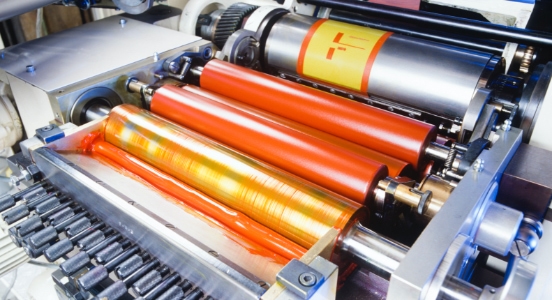
What is the difference between wax, wax-resin, and resin thermal transfer ribbons?
Most thermal transfer applications fall into three primary ribbon categories: wax, wax-resin, and resin. Each offers a different balance of print performance, durability, substrate compatibility, and cost.
Choosing the most durable ribbon available is not automatically the right answer. The goal is to select a formulation that provides the performance your application actually requires without paying for durability you do not need.
When is a wax thermal transfer ribbon the right choice?
Wax ribbons are commonly used for general-purpose printing on paper-based label materials. They melt relatively easily during printing and can produce dark, clearly defined images at efficient print speeds. For labels used in controlled indoor environments, wax can provide a practical balance between quality and cost.
Typical applications may include:
- Shipping and distribution labels
- Inventory identification
- Warehouse labels
- Carton labeling
- Retail tags
- General barcode labels
- Short- to medium-term product identification
Wax formulations are generally best suited to applications where labels will not face severe abrasion, chemicals, outdoor exposure, or repeated handling.
Modern wax formulations can still offer strong image clarity and edge definition. DNP, for example, positions its resin-enhanced wax formulations around quick, uniform transfer and clear image reproduction across common substrates.
When should you move to a wax-resin ribbon?
Wax-resin ribbons add greater durability while retaining much of the versatility associated with wax. They provide a cost-effective upgrade when standard paper labels are not durable enough or when you need to print on coated papers and certain synthetic materials. Wax-resin formulations can provide better resistance to scratching and smudging, making them useful for labels that face regular handling or more demanding storage conditions.
Potential applications include:
- Product identification
- Outdoor or semi-outdoor tags
- Building and industrial materials
- Horticultural labels
- Distribution and logistics
- Packaging labels
- Labels exposed to moderate abrasion or moisture
Some wax-resin formulations also provide resistance to UV exposure or solvents. DNP’s current wax-resin range, for example, includes formulations intended for coated stocks, polypropylene, polyethylene, polyolefin, polystyrene, vinyl, and other materials, offering strong resistance to scratches, smudges, UV light, and solvents.
Wax-resin delivers an ideal balance, offering enhanced durability over standard wax without requiring a full-resin ribbon.
When does a resin ribbon make more sense?
Resin thermal transfer ribbons are designed for applications where the printed image needs to withstand considerably harsher conditions. Paired with high-performance synthetic substrates, resin provides maximum protection against scratching, smudging, aggressive chemicals, extreme heat, and repeated handling.
Resin may be appropriate for:
- Industrial equipment
- Chemical containers
- Automotive components
- Electronics
- Laboratory or healthcare identification
- Pharmaceutical labeling
- Safety and warning labels
- Long-term asset identification
- Outdoor applications
- Textile and garment care labels
Full resin may cost more than a general-purpose wax ribbon, but the added durability can be essential when damaged or unreadable information creates operational, traceability, or safety problems.
How do you choose the right thermal transfer ribbon?
Selecting the right thermal ribbon starts with the application, not simply the ribbon type. At Pro-Motion Industries, we can help you evaluate the factors that have the greatest effect on printing performance.
What label or tag material are you printing on?
Your substrate is one of the first considerations. Thermal transfer systems can print on materials including paper, polypropylene, polyester, and other synthetic stocks, but the ribbon needs to bond properly with the selected surface. Zebra likewise recommends carefully matching ribbon and media because compatibility directly affects print quality and durability.
Uncoated paper may work well with a wax formulation. A synthetic label intended for a difficult environment may require wax-resin or resin. The surface coating, finish, and intended label life should all influence the decision.
What does the printed label need to withstand?
Consider what happens to the label after printing. Will it remain inside a dry warehouse? Will workers repeatedly handle it? Could it be exposed to refrigeration, sunlight, moisture, cleaning products, oils, solvents, or weather?
A shipping label and a chemical-drum label have very different performance requirements. Defining those conditions early helps narrow the ribbon options and prevents both underspecifying and overspecifying the application.
How important are barcode clarity and small-text definition?
Poor print quality can become an operational problem when scanners cannot read barcodes or employees struggle to interpret small characters. Thermal printing is widely used for barcode applications because it can produce highly defined edges and consistent images. Ribbon formulation, media compatibility, printer settings, and print resolution all contribute to the result.
For labels containing dense barcodes, serial numbers, lot information, small characters, or detailed graphics, we can help you identify a combination suited to the required level of definition.
Is the ribbon compatible with your printer?
Ribbon chemistry is only part of the specification. Printer type also matters. Thermal transfer ribbon manufacturers commonly differentiate between flat-head printers and near-edge or thermal-transfer-overprinting systems, and individual products may support different printer brands and operating conditions. DNP’s ribbon selection system, for example, lets buyers filter products by substrate, printer type, ribbon category, application, printer brand, certification, and other criteria.
Before ordering ribbon, verify the printer model and existing media specifications rather than choosing on formulation alone.
How do thermal transfer ribbons affect print quality and label durability?
The ribbon becomes part of the final printed image, so its formulation has a direct effect on performance. A properly matched ribbon can produce:
Sharp barcode edges
Clean edge definition helps scanners read variable data accurately and supports dependable identification throughout your workflow.

Clear text and graphics
High-quality transfer improves the appearance of product information, serial numbers, warnings, instructions, and other printed details.

Better resistance to smudging
Appropriate wax-resin and resin formulations can reduce damage caused by handling or rubbing.

Longer-lasting identification
For assets, products, or materials that remain in service for extended periods, the correct ribbon can help information remain readable much longer.

Resistance suited to the environment
Depending on the ribbon and label stock, thermal transfer printing can support applications exposed to moisture, abrasion, UV light, chemicals, solvents, or temperature changes.
Where are thermal transfer ribbons commonly used?
Thermal transfer printing supports a broad range of variable-data and identification applications by allowing businesses to match different ribbon formulations with different label stocks.
How are thermal transfer ribbons used in manufacturing?
Manufacturers may use thermal transfer printing for component identification, work-in-process labels, equipment identification, serial numbers, safety information, or finished-product tracking. Durable formulations are especially useful when labels face oils, handling, abrasion, heat, or other shop-floor conditions.
Why are ribbons useful in warehousing and logistics?
Warehouses and distribution operations depend on readable barcodes for receiving, picking, tracking, shipping, and inventory control. For everyday paper labels used indoors, a wax formulation may be enough. More demanding applications can move to wax-resin or resin without changing the fundamental printing method.
Where does thermal transfer fit in food and beverage packaging?
Thermal transfer systems can print variable information used throughout food and beverage production and distribution. Depending on the packaging and environment, applications can include product identification, lot information, barcodes, case labels, and other operational data. Ribbon and substrate selection becomes particularly important where packaging encounters refrigeration, moisture, handling, or high-speed production.
Why do healthcare and pharmaceutical operations use thermal transfer printing?
Clear identification is critical when labels contain barcodes, batch information, specimen details, inventory data, or other information that must remain legible. Thermal transfer printing is commonly used for laboratory specimens and other long-life identification applications because compatible ribbon and media combinations can offer substantially greater environmental resistance than short-term direct thermal labels.
Can thermal transfer ribbons support specialty applications?
Yes. Ribbon manufacturers offer formulations for demanding uses such as chemical labeling, automotive identification, outdoor tags, electrical components, apparel care labels, and other specialized applications. The challenge is matching the formulation to your actual operating conditions rather than assuming one ribbon can handle every environment.
Why work with Pro-Motion Industries for thermal transfer solutions?
Pro-Motion has supported labeling, packaging, and product decoration applications since 1994. Our work extends beyond individual consumables, giving our team a broader understanding of how ribbons, labels, printers, applicators, and production requirements need to work together.
Businesses turn to Pro-Motion for:

Application-focused guidance:
We start with your product, substrate, printer, environment, and production goals.

Labeling equipment expertise:
Our equipment catalog includes print-and-apply systems and other industrial labeling technologies.

Practical compatibility support:
We help you consider the ribbon as one part of the complete printing system.

Scalable labeling knowledge:
Our experience spans contract labeling, equipment, packaging decoration, and variable-data applications.

Straightforward recommendations:
We focus on finding a solution that meets your performance and budget requirements without unnecessary complexity.
What should you know before ordering thermal transfer ribbons?
Not necessarily. Each formulation offers different substrate compatibility and resistance characteristics. Your printer, label stock, operating conditions, and durability requirements should guide the selection.
Resin ribbons generally offer the highest level of resistance for demanding applications, particularly when paired with compatible synthetic label materials. However, the best ribbon is the one matched to your actual requirements. A wax or wax-resin ribbon may be more appropriate for less demanding applications.
Yes. Wax-resin and resin formulations can support a range of synthetic label materials. Compatibility varies by formulation, so the substrate and ribbon should be evaluated together.
Possible causes include an unsuitable ribbon formulation, a poor ribbon-to-label match, incorrect printer settings, or environmental conditions that exceed the material’s intended performance. Reviewing the complete setup is usually more productive than replacing one component through trial and error.
Yes. Thermal transfer printing can produce crisp, consistent barcode images with strong edge definition, making it widely used for product identification, inventory, tracking, asset labeling, and other barcode applications.
Start with your printer model, printhead technology, current label stock, ribbon dimensions, and application requirements. Pro-Motion Industries can help you evaluate those details and narrow the available options.
Need help choosing a thermal transfer ribbon?
A good ribbon should do more than run through your printer. It should produce clear information, bond properly to your label material, and remain readable for as long as your application requires. Let us help you identify a practical thermal transfer solution for your production requirements and budget.