
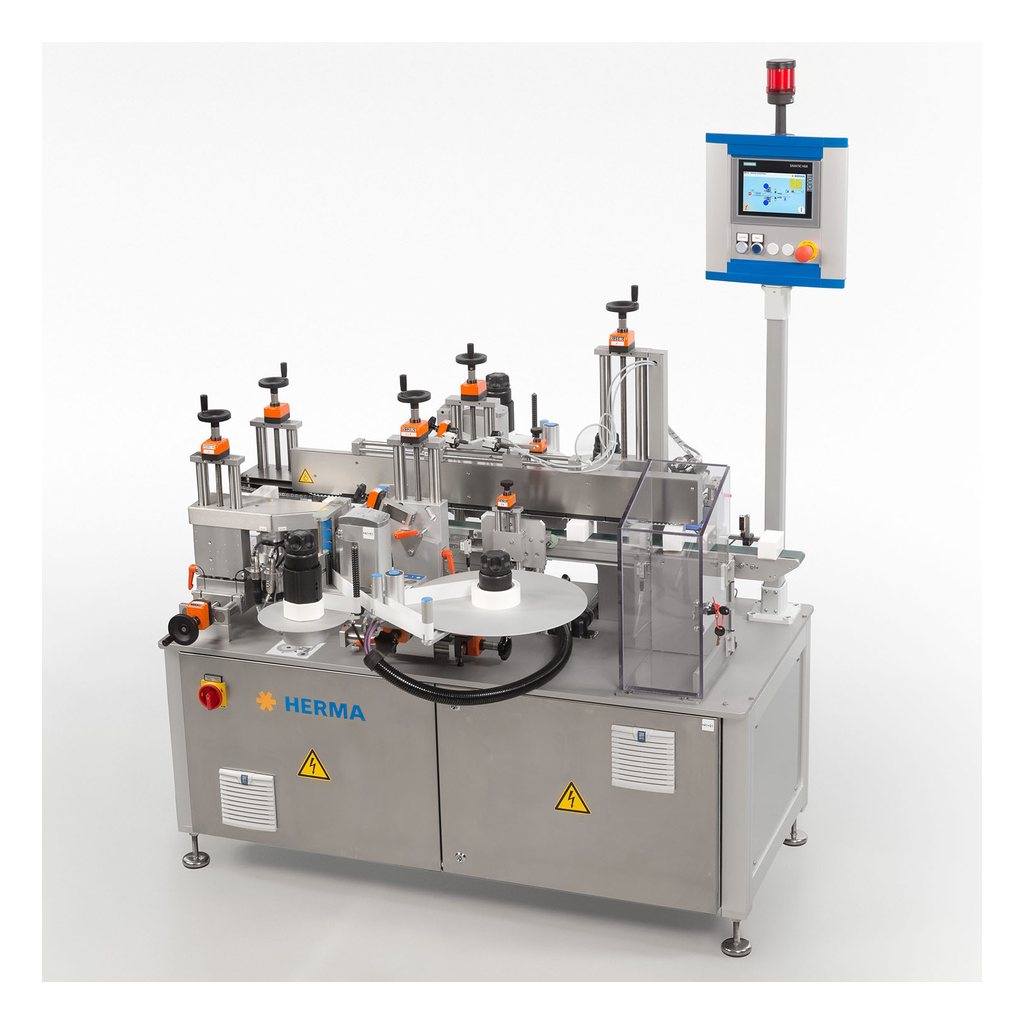
Product Description
Focus topic: Tamper-evident labeling:
The tamper-evident labeler enables compliant pharmaceutical labeling and has been developed to meet the requirements of the Falsified Medicine Directive 2011/62/EU.
Implementing these new measures was a herculean task for the pharmaceutical companies. Manufacturers estimated the costs of this undertaking at several hundred thousand euro – for each product line. When it comes to the continued use of existing folding boxes, seal labels are a particularly interesting option from a cost/benefit perspective.
The special tamper-evident labels provide a reliable seal, thereby ensuring the necessary guarantee and safety. In addition to the control measure, consumers can be safe in the knowledge of acquiring a genuine, high-quality product.
In the past, highly specialized materials were used for the security seals, such as destructible labels, which effectively disintegrate when tampered with, or “void” labels, which leave an irreversible imprint on the packaging when it is opened. These special materials, however, are not well suited to high-speed mechanical application and therefore require significant additional investment on the part of manufacturers.
From an economical and technical perspective, conventional rectangular or round labels are the most favorable solution. The decisive factor, in any case, is the adhesive. It must be highly resistant to water, hot air and various solvents. This is the only way to prevent the label being removed, even from heavily painted boxes, without visibly destroying itself or the folding box.
This is where we come in:
In addition to the special label material, HERMA offers a range of efficient and reliable solutions for sealing packaging with seals or tamper-evident labels. These are available both for stand-alone manufacture and for line production with maximum safety for people and products.
This is done using our specially developed tamper-evident machines, which are in particularly high demand thanks to their sophisticated labeling technology.
And this is how it works:
A high degree of precision is required when using tamper-evident labels. This is because the relatively small labels must be applied to the side of the flaps such that they extend approximately 50 percent beyond the box body at the top and bottom.
The folding boxes are pushed head-on from the downstream machine onto the HERMA transfer plate. They are aligned by lateral guides and picked up by a driven upper belt, which ensures the necessary spacing between the boxes. A conveyor belt positioned directly after the upper belt stabilizes the boxes from below.
An optional thermal inkjet printer applies variable text and code to the front and rear sides of the folding box, which is then checked by cameras in a downstream control station.
Secured between the upper belt and conveyor belt, the tamper-evident labels are applied to the front and back of the folding boxes with a protrusion of 50% as they pass by.
The presence of the tamper-evident labels is verified by means of fiber-optic sensors. The protruding tamper-evident labels are then folded 90 degrees by means of guides and pressed on with spring-mounted rollers. To ensure that the tamper-evident labels are folded and pressed on to the folding boxes, additional fiber-optic sensors are used to check for protruding labels.
In the case of an incorrect print or code or if a missing or non-folded label is identified, the affected box is reliably ejected by a slider.
A reject function crosscheck ensures that faulty boxes have been rejected. The machine stops with an error message if a faulty product has not been rejected. In the case of a series error, the machine stops so that utmost safety is maintained.